Workers servicing industrial machinery face life-threatening risks if equipment activates unexpectedly. A conveyor belt powers on mid-repair. A press machine cycles while jammed. A hydraulic line releases under pressure. These aren't hypotheticals—they’re preventable tragedies. The solution? Lockout tagout (LOTO).
At its core, lockout tagout (LOTO) is a safety procedure used to ensure machines or energy sources are de-energized and can’t restart during maintenance or servicing. It protects workers from hazardous energy—electrical, mechanical, hydraulic, pneumatic, chemical, or thermal—releasing without warning.
This isn’t just protocol. It’s a lifeline.
What Exactly Is Lockout Tagout (LOTO)?
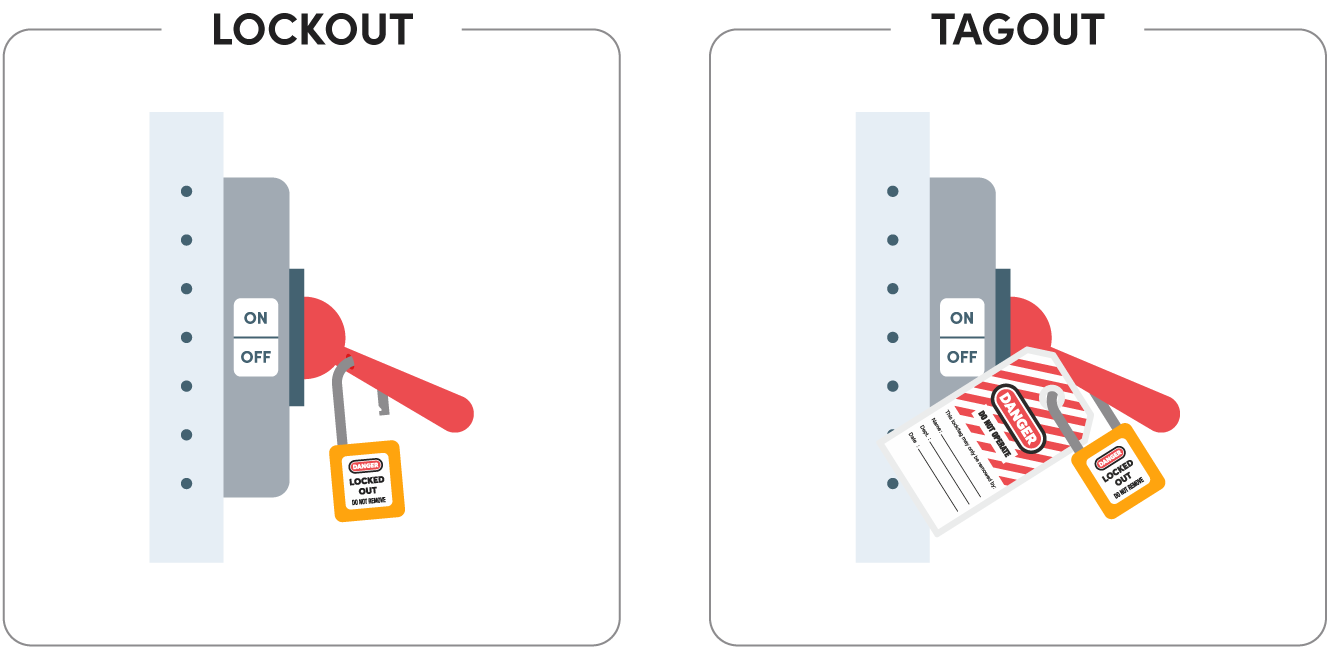
Lockout tagout (LOTO) is a formalized safety process that isolates energy sources from machinery and locks them in an "off" or "safe" position. A physical lock prevents unauthorized or accidental re-energization, while a tag identifies who applied the lock, why, and when.
Think of it like a construction site closing a gas line: it’s not enough to just turn the valve. You cap it, secure it, and post a warning. LOTO works the same.
The term combines two actions: - Lockout: Applying a physical lock to an energy-isolating device (like a circuit breaker or valve). - Tagout: Attaching a durable tag with safety warnings and worker information.
While tagging alone is less secure than locking, OSHA allows tagout only when a lock can't be used—provided extra protective measures are in place.
Real-World Example: Conveyor System Maintenance
- A technician must unclog a jammed conveyor in a packaging plant. Before starting, they:
- Shut down the system using the emergency stop.
- Locate the main disconnect switch.
- Flip the switch off and apply their personal lock.
- Attach a tag stating: “Do Not Operate – John Doe, Maintenance, 10:15 AM.”
- Test the system by pressing start (without removing the lock) to verify zero energy.
Only after these steps does work begin. This entire sequence is LOTO in practice.
Why LOTO Is Non-Negotiable in Industrial Environments
OSHA estimates that nearly 10% of serious accidents in manufacturing are linked to uncontrolled energy. The consequences? Crush injuries, amputations, electrocution, even fatalities.

LOTO isn’t about avoiding fines—it’s about preventing irreversible harm. Consider: - A worker cleaning a mixer in a food plant is injured when a colleague unknowingly restarts it. - An electrician repairing a panel is shocked when a circuit unexpectedly re-energizes. - A maintenance crew servicing a press machine is hit by a rapidly moving arm.
Each could have been prevented with proper LOTO.
Beyond safety, compliance matters. OSHA’s standard 29 CFR 1910.147 outlines strict LOTO requirements. Violations routinely draw penalties—fines that can exceed $15,000 per instance. More importantly, poor safety culture damages morale, productivity, and reputation.
How LOTO Works: The 6-Step Process
Effective LOTO isn’t improvisation. It’s a repeatable, documented sequence. Most programs follow these six critical steps:
- Preparation
- Identify all energy sources (electrical, hydraulic, stored spring tension, etc.) and required lockout devices.
- Notification
- Inform all affected employees that maintenance is starting and equipment will be shut down.
- Shutdown
- Turn off the machine using normal stopping procedures (e.g., stopping the motor).
- Isolation
- Disconnect or isolate the machine from its energy source using breakers, valves, or blocks.
- Application of Locks and Tags
- Each authorized employee applies their personal lock and tag. Group lockout boxes may be used for teams.
- Stored Energy Check
- Verify zero energy by attempting to restart (without removing locks) and releasing stored energy (e.g., draining capacitors, lowering suspended loads).
After servicing, only the person who applied the lock can remove it—unless a formal removal procedure exists (e.g., shift changes).
Common LOTO Mistakes That Endanger Lives
Even experienced teams make critical errors: - Using group locks instead of individual locks – violates personal accountability. - Skipping the energy verification step – assumes the machine is dead without testing. - Leaving locks on after work ends – creates confusion and workflow delays. - Allowing others to remove your lock – breaks the one-person, one-lock rule. - Using damaged or generic tags – reduces clarity and compliance.
These aren’t minor oversights. They’re direct pathways to injury.
Who Is Responsible for LOTO Compliance?
Two roles are defined under OSHA:
Authorized Employees These are workers trained to implement LOTO procedures. They understand energy types, isolation points, and lock application. Only they can service equipment under LOTO.
Affected Employees These are operators or others who use or work near the equipment but don’t perform maintenance. They must recognize LOTO tags and never attempt to restart locked machines.
Training is mandatory. Authorized employees need retraining every 12 months or when procedures change. New hires must be trained before exposure.
LOTO Devices: Tools That Make the System Work
No LOTO program functions without reliable physical tools. These aren't one-size-fits-all—selection depends on machine type and energy source.
| Device Type | Purpose | Example Use Case |
|---|---|---|
| Lockout Hasps | Allow multiple locks on one isolation point | Group maintenance on a large motor |
| Circuit Breaker Locks | Prevent breaker reactivation | Electrical panel servicing |
| Valve Lockouts | Secure closed valves on pipes | Locking hydraulic fluid lines |
| Plug Lockouts | Cover electrical plugs | Small machinery like drills |
| Hasp & Lock Stations | Store locks/tags during shift changes | Multi-crew environments |
Each device must be durable, standardized (e.g., red or orange), and identifiable as a safety control—never used for non-safety purposes.
When Standard LOTO Doesn’t Apply: Alternate Procedures
Not all maintenance requires full LOTO. OSHA allows exceptions under specific conditions:
- Minor tool changes or adjustments (e.g., blade replacement) that occur during normal production, provided they follow routine procedures and present minimal risk.
- Servicing corded portable tools if unplugged and under continuous operator control.
These exceptions are narrowly defined. Misapplication risks non-compliance.
Industries That Rely on LOTO
LOTO is universal in any environment with machinery and energy sources: - Manufacturing: Assembly lines, presses, robotic arms - Construction: Cranes, lifts, welding equipment - Utilities: Power plants, water treatment facilities - Healthcare: MRI machines, sterilizers, backup generators - Agriculture: Tractors, grain augers, harvesters
Even offices use LOTO when repairing HVAC units or elevators.
Building a LOTO Program: Key Steps
Creating a compliant program involves more than buying locks and tags. A sustainable system includes: - Energy control procedures – written, machine-specific steps. - Inventory of equipment – list every machine requiring LOTO. - Training records – proof of employee competency. - Periodic audits – annual inspections to verify compliance. - Lockout stations – centralized access to devices and forms.
Templates help, but customization is essential. A CNC machine in an auto shop has different energy risks than a boiler in a hospital.
The Bottom Line: LOTO Is Safety Infrastructure
Lockout tagout isn’t a checkbox. It’s a culture. It demands discipline, clarity, and consistency. Every lock, every tag, every verification step enforces a simple truth: no one should risk their life because a machine turned on when it shouldn’t.
Implementing LOTO isn’t just about meeting OSHA standards—it’s about building a workplace where safety is non-negotiable. Start with a single machine. Document the process. Train your team. Scale systematically.
The cost of failure isn’t measured in fines. It’s measured in lives.
Frequently Asked Questions
What is the main purpose of lockout tagout? The primary purpose is to protect workers from unexpected energization or startup of machinery during servicing, preventing injury or death from hazardous energy.
Who can remove a LOTO device? Only the authorized employee who applied the lock and tag may remove it, unless a formal alternate procedure (like shift change protocols) is in place.
Is tagout as effective as lockout? Tagout alone is less secure. OSHA allows it only when a lock can’t be used, but it requires additional safety measures like continuous supervision.
Do all machines require LOTO? Any machine or equipment with potentially hazardous energy sources that could harm workers during maintenance must have LOTO procedures.
How often should LOTO procedures be audited? OSHA requires periodic inspections at least once every 12 months to ensure procedures are followed and remain effective.
Can multiple people work on the same machine under LOTO? Yes, using a group lockout box or hasp, where each authorized worker applies their own lock. No one can restart until all locks are removed.
What happens if a worker forgets to lock out a machine? It creates a high-risk situation. Companies should enforce strict accountability, retraining, and disciplinary action to prevent recurrence.
FAQ
What should you look for in What Is Lockout Tagout (LOTO): A Complete Guide to Safety? Focus on relevance, practical value, and how well the solution matches real user intent.
Is What Is Lockout Tagout (LOTO): A Complete Guide to Safety suitable for beginners? That depends on the workflow, but a clear step-by-step approach usually makes it easier to start.
How do you compare options around What Is Lockout Tagout (LOTO): A Complete Guide to Safety? Compare features, trust signals, limitations, pricing, and ease of implementation.
What mistakes should you avoid? Avoid generic choices, weak validation, and decisions based only on marketing claims.
What is the next best step? Shortlist the most relevant options, validate them quickly, and refine from real-world results.