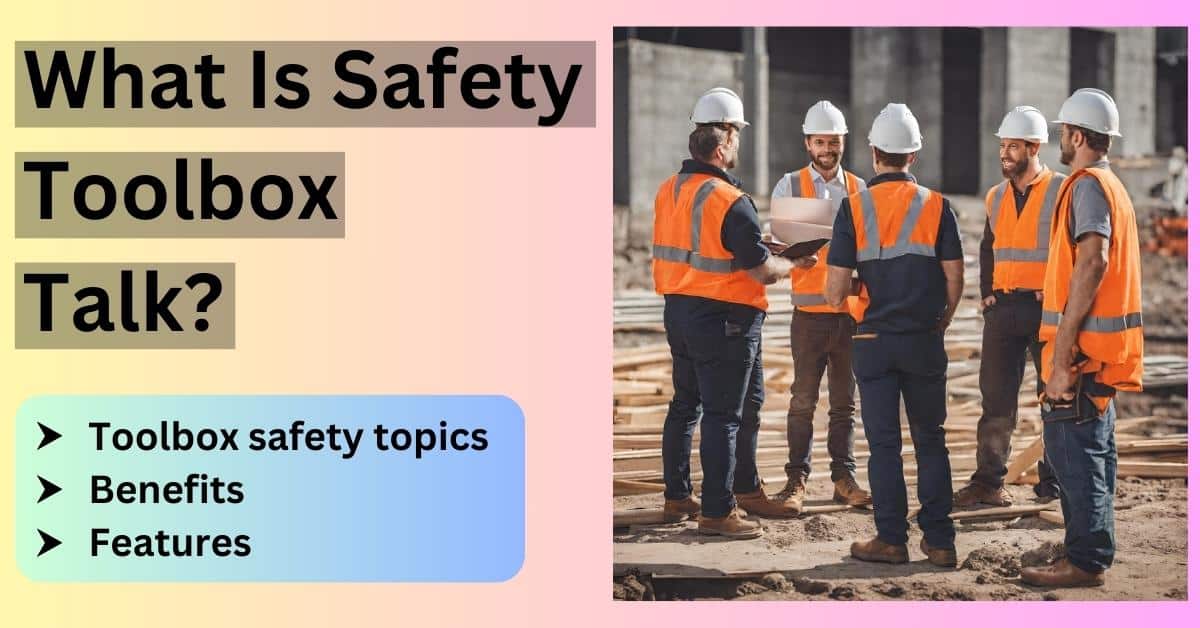
Workers skip safety briefings because they’re repetitive, vague, or disconnected from real risks. That’s why most toolbox talks fail—they check a box instead of changing behavior. The best ones do the opposite: they address immediate hazards, spark discussion, and make safety personal. This guide delivers high-impact toolbox talk safety topics that actually work, with practical examples and talking points you can use tomorrow.
Why Most Toolbox Talks Fall Short
Too many safety talks follow the same template: read a handout, sign a sheet, move on. They lack context, urgency, and relevance. A worker on a roofing crew doesn’t care about forklift safety if they’ve never seen a forklift on site. Generic content breeds complacency.
Real impact comes when talks are: - Site-specific - Time-bound (10–15 minutes max) - Focused on immediate hazards - Led by supervisors who know the crew
Example: A crew preparing to excavate needs a talk on trench collapse risks—not electrical safety, unless live wiring is nearby. Relevance builds engagement.
Top 10 High-Impact Toolbox Talk Safety Topics
These are the most frequent and dangerous risks across construction, manufacturing, and field services. Rotate them weekly and adapt to current work.
1. Fall Protection (Height Work)
Falls are the leading cause of construction deaths. A talk should cover: - Proper harness inspection and wear - Anchor point strength requirements (5,000 lbs minimum) - Ladder safety: 3-point contact, extension above landing
Real use case: A worker leaned too far from a scaffold to reach a beam, lost balance, and fell 12 feet. His harness wasn’t connected. The talk the week before mentioned fall protection—but didn’t include harness hook-up checks.
Pro tip: Bring a damaged harness to the talk. Let workers inspect it. Seeing frayed webbing is more memorable than a slide.
2. Struck-By and Caught-Between Hazards
Moving equipment, swinging loads, and pinch points kill silently. Focus on: - Exclusion zones around cranes and forklifts - Lockout/tagout (LOTO) before maintenance - Proper signaling for heavy lifts
Common mistake: Workers walk behind reversing vehicles because “the driver sees me.” Reality? Blind spots exist. Use spotters and alarms.
3. Electrical Safety
Even low-voltage shocks can be fatal. Talks should stress: - Treating all wires as live - Using insulated tools near power sources - Recognizing arc flash risks
Workflow tip: Before any wall cut, conduct a “cable scan” demo using a stud finder with AC detection. Show workers how easy it is to miss hidden wiring.
4. Hand and Power Tool Safety
Tools cause thousands of injuries yearly. Key points: - Inspecting cords and guards before use - Using PPE: gloves, goggles, hearing protection - Never carrying tools by the cord
Limitation: Many workers bypass safety guards because they’re “in the way.” Address this head-on: “Is saving 10 seconds worth a trip to the ER?”
5. Hazard Communication (HazCom)
Chemicals are everywhere—cleaners, adhesives, fuels. Workers must know: - How to read Safety Data Sheets (SDS) - Proper PPE for each substance - Spill response steps
Example: A maintenance team used a degreaser without ventilation. Two workers passed out. The SDS was in the office, not on-site. Fix: Keep printed SDS in crew vans.
6. Fire Prevention and Response
Not just about extinguishers. Cover: - Flammable material storage - Hot work permits - Evacuation routes and assembly points
Practice drill: Once a month, run a surprise 30-second evacuation. Time it. Identify bottlenecks.
7. Heat and Cold Stress
Environmental risks are underestimated. Teach: - Early signs: dizziness, cramps, blurred vision - Hydration rules: sip water every 15 minutes in heat - Buddy system for solo workers
Real case: A roofer collapsed at 2 PM in July. No cool-down area. No water on the roof. This could’ve been prevented with a simple morning talk on heat stress.
8. PPE: Beyond the Basics
It’s not just “wear your gear.” Dive deeper: - Fit testing for respirators - Replacement schedules for helmets and gloves - Limitations: “Hard hats won’t stop a falling I-beam”
Engagement hack: Ask, “When did you last replace your safety glasses?” Most can’t remember. That’s a problem.
9. Housekeeping and Slip/Trip Prevention
Clutter kills. Emphasize: - Clean-as-you-go policy - Immediate spill cleanup - Proper cord routing
Mistake: Extension cords snake across walkways. Workers trip. Solution? Use cord covers or overhead suspension.
10. Emergency Response and First Aid
Workers freeze during crises. Rehearse: - How to call for help (site code, location ID) - Who has first aid training - AED locations
Use case: A worker cut his hand. The first aider was on break. No one knew where the kit was. Now, every crew designates two first aid responders per shift.
How to Deliver Effective Toolbox Talks
A great topic fails with poor delivery. Follow this workflow:
- Prep the day before: Match the topic to the next day’s work.
- Gather visuals: Damaged gear, SDS sheets, photos of near-misses.
- Start with a question: “What’s the biggest hazard we face today?”
- Encourage input: Let workers share close calls.
- End with commitment: “Who will check harnesses before climbing?”
Avoid reading slides. Talk like a peer, not a lecturer.
Common Pitfalls and How to Fix Them
| Mistake | Why It Fails | Fix |
|---|---|---|
| Same topic every month | Workers tune out | Rotate and refresh quarterly |
| No documentation | OSHA cites missing records | Use a digital log or sign-in sheet |
| Supervisor-led only | Misses frontline insight | Rotate talk leaders weekly |
| No follow-up | No accountability | Do random checks next week |
Quote from a safety manager: “We started letting junior crew members lead talks. Participation jumped 70%. They talk about real risks they’ve seen.”
Integrating Toolbox Talks Into Daily Workflow
They shouldn’t feel like extra work. Weave them into existing routines: - Hold talks during morning equipment check - Use them as pre-task briefings for high-risk jobs - Record audio summaries for remote teams
Example: A plumbing crew does a 10-minute talk before entering a confined space. They review air testing results, lifeline setup, and emergency signals. It’s not a “meeting”—it’s part of the job.
Measuring the Impact of Your Safety Talks
You’re doing them right if: - Workers report hazards more often - Near-miss reporting increases - PPE compliance improves - Incident rates drop quarter over quarter
Use a simple scorecard: - Attendance rate - Engagement (hands raised, questions asked) - Follow-up actions completed
Review monthly with supervisors. Adjust topics based on data.
Closing: Make Safety a Conversation, Not a Lecture
Toolbox talks aren’t about compliance—they’re about survival. The most effective ones turn passive listeners into active participants. Pick a high-risk topic, show real consequences, and ask workers what they would do. That shift—from telling to discussing—is what changes behavior.
Start tomorrow: choose one topic from this list, bring a real example, and ask, “How do we stay safe doing this?” That’s the talk that sticks.
Frequently Asked Questions
What is the best time to hold a toolbox talk? First thing in the morning or right before starting a high-risk task—when focus is highest.
How long should a toolbox talk last? Keep it between 10 and 15 minutes. Long enough to cover key points, short enough to hold attention.
Who should lead the talk? Supervisors should lead, but rotating crew members keeps engagement high and surfaces new insights.
Do toolbox talks need to be documented? Yes. OSHA requires records of safety training. Use sign-in sheets or digital logs with date, topic, attendees, and supervisor signature.
Can toolbox talks reduce insurance premiums? Indirectly. Fewer incidents lead to better EMR scores, which insurers use to calculate premiums.
Should toolbox talks be the same across all sites? No. Customize based on site-specific hazards, current tasks, and past incidents.
How often should toolbox talks happen? At minimum, weekly. Daily for high-risk environments like construction or chemical handling.
FAQ
What should you look for in Essential Toolbox Talk Safety Topics for Every Workplace? Focus on relevance, practical value, and how well the solution matches real user intent.
Is Essential Toolbox Talk Safety Topics for Every Workplace suitable for beginners? That depends on the workflow, but a clear step-by-step approach usually makes it easier to start.
How do you compare options around Essential Toolbox Talk Safety Topics for Every Workplace? Compare features, trust signals, limitations, pricing, and ease of implementation.
What mistakes should you avoid? Avoid generic choices, weak validation, and decisions based only on marketing claims.
What is the next best step? Shortlist the most relevant options, validate them quickly, and refine from real-world results.